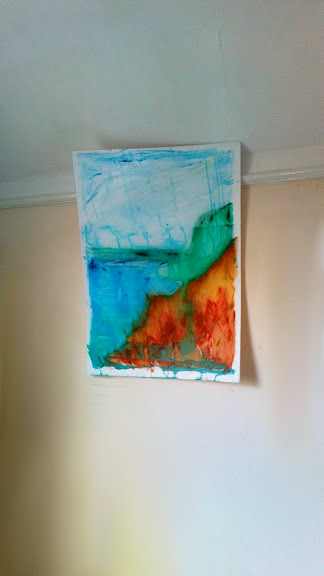
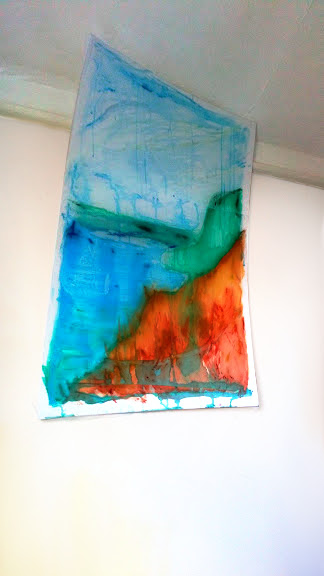
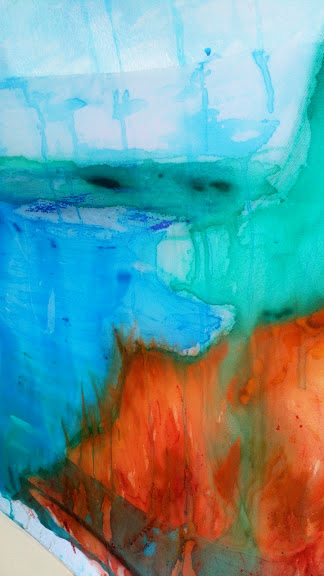
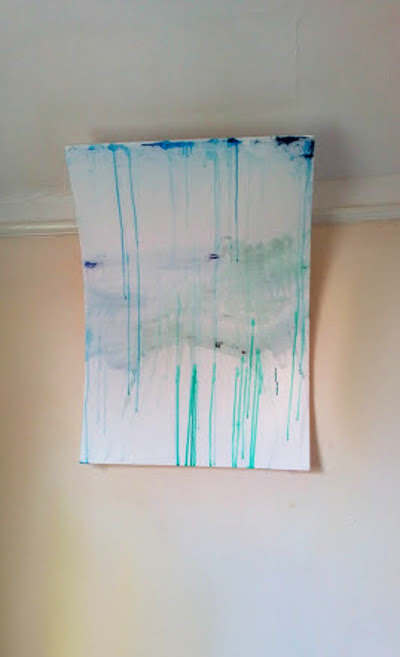
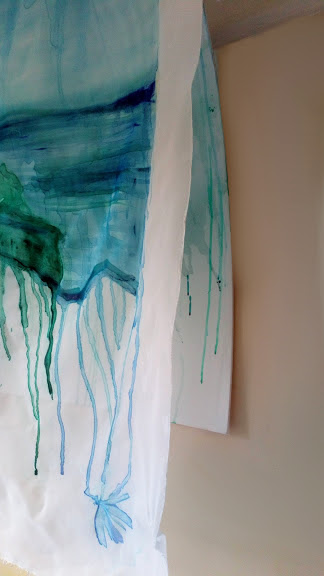
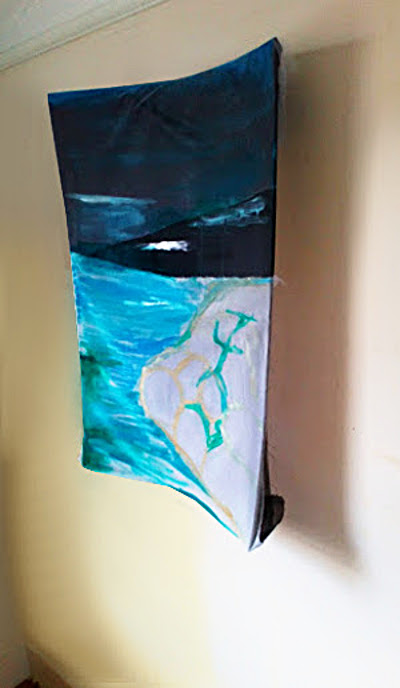
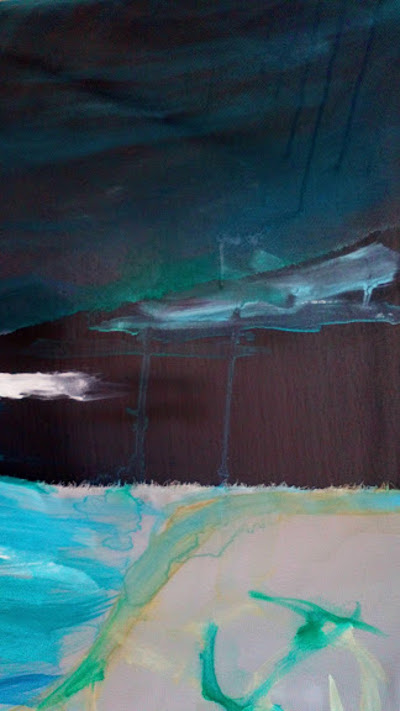
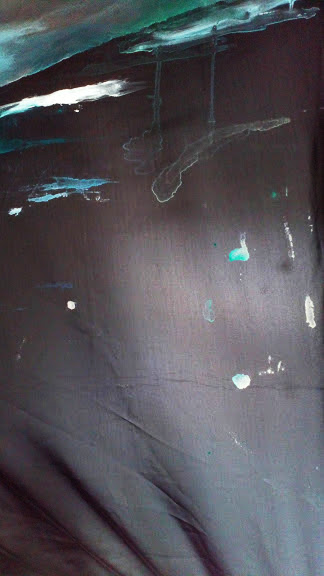
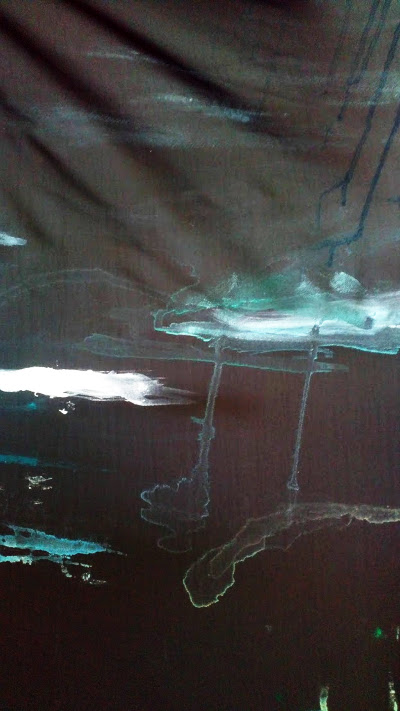
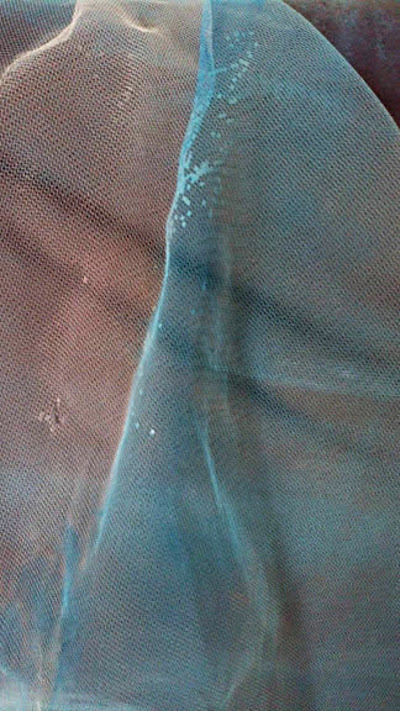
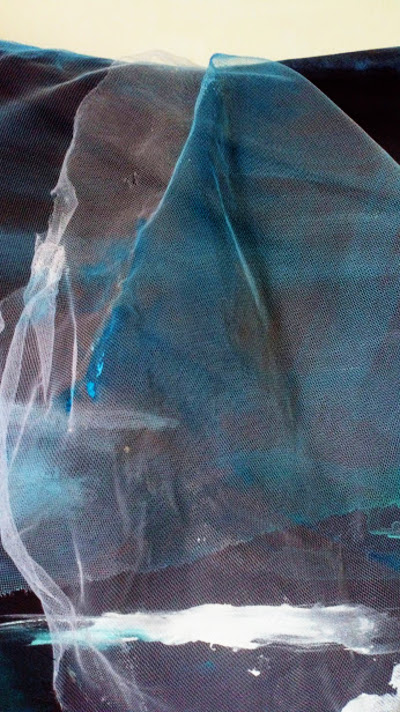
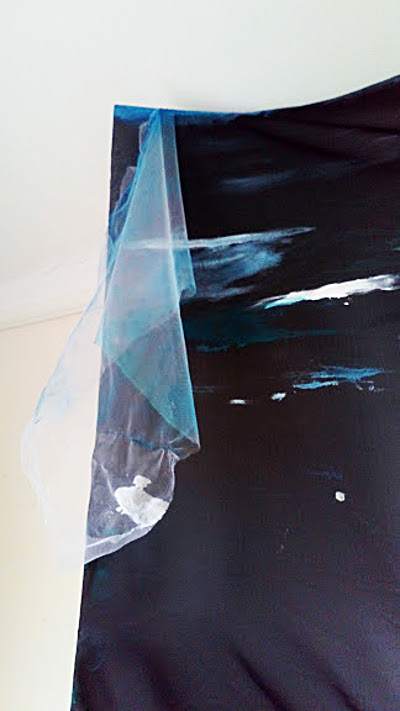
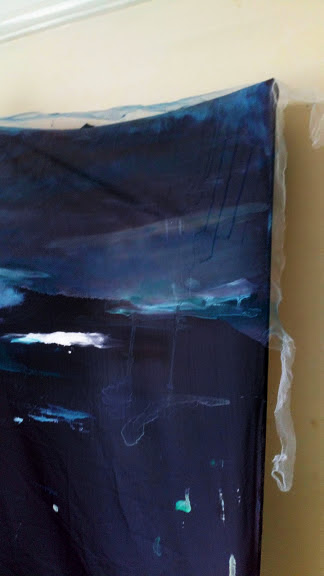
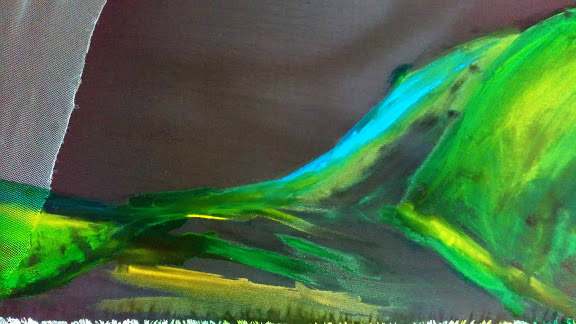
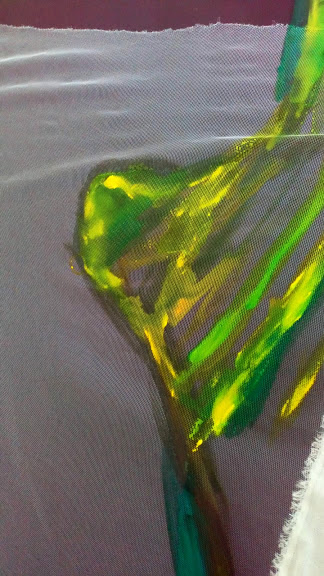
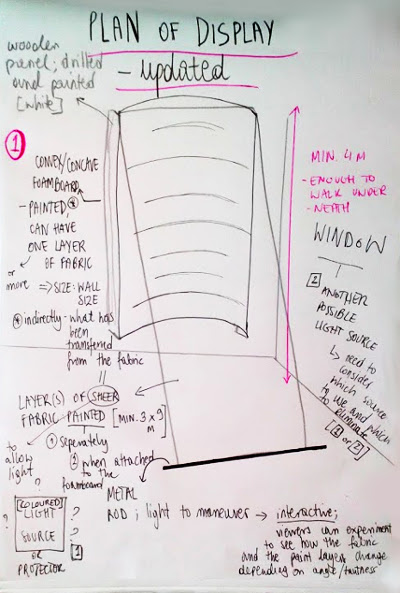
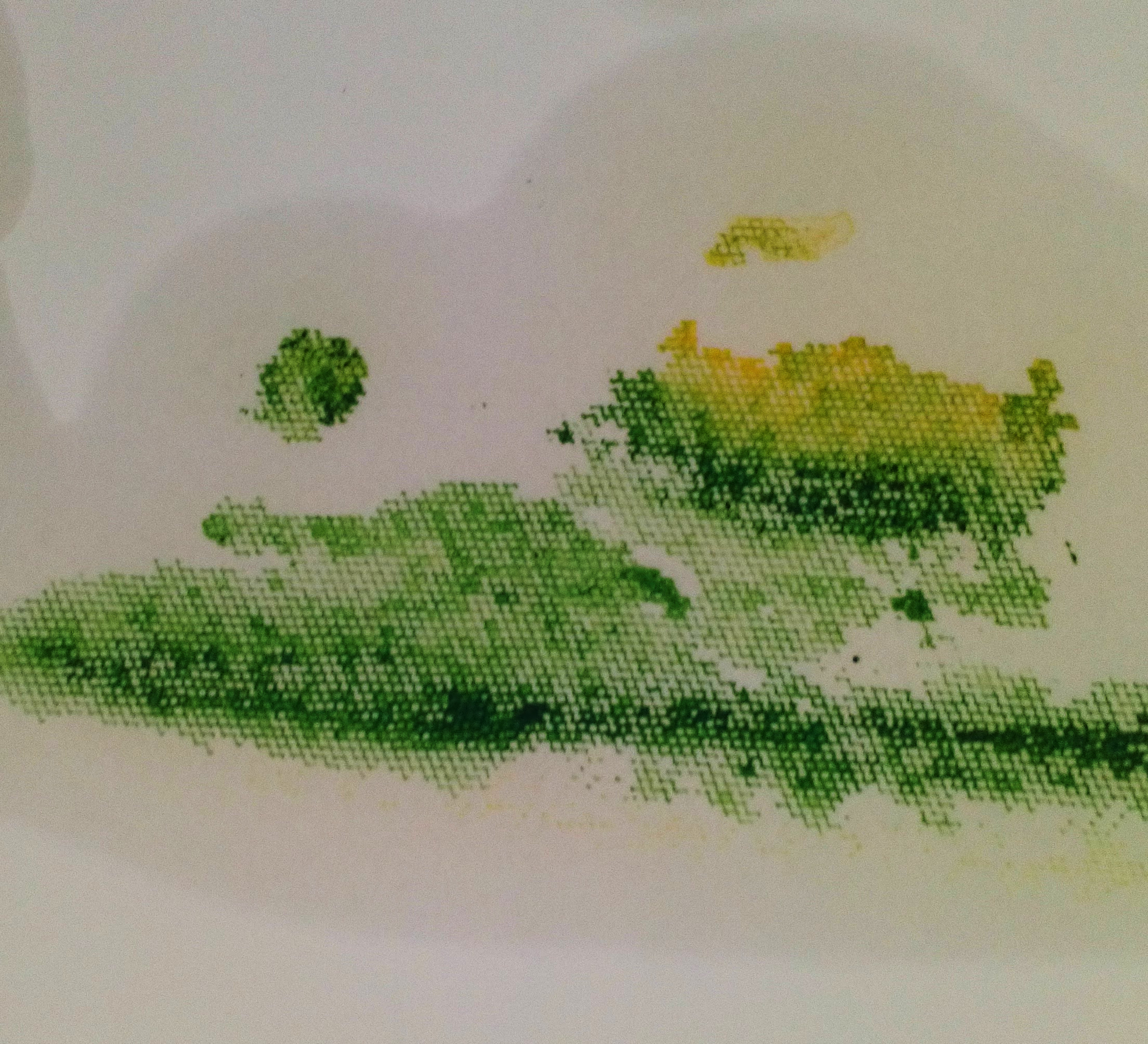
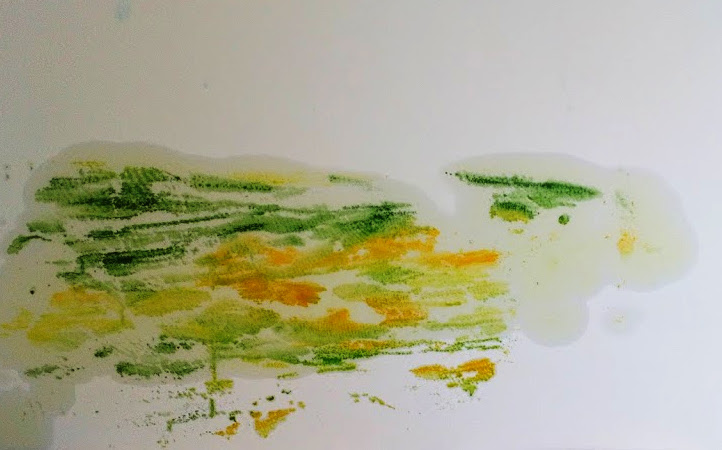
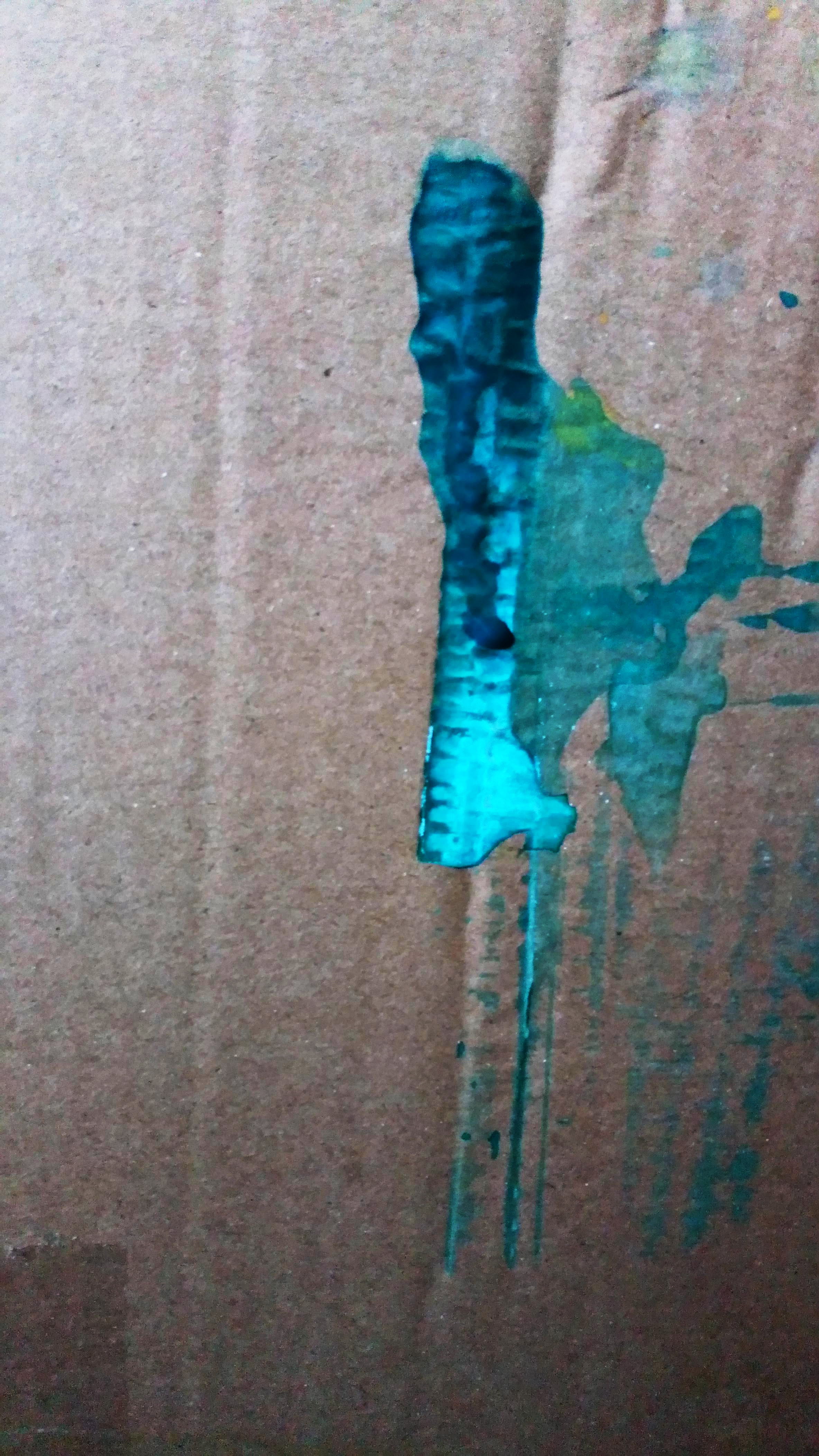
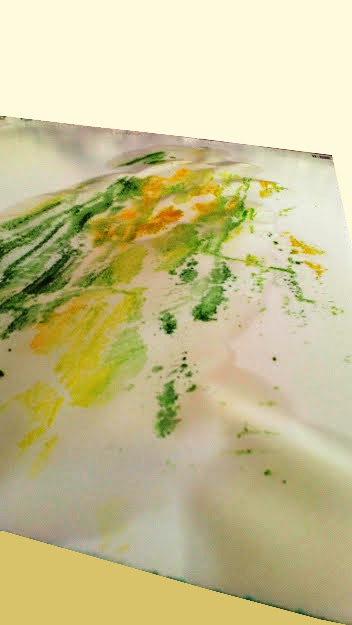
The series of paintings (Painting 1, Painting 2 and Painting 3) is a collection of artworks produced through experimentation and focusing on the process as well as materiality. All of the paintings share the methodological process of making the base and attaching the fabric. What differs is the order, amount, type and dimensions of fabric used. It is vivid that Painting 1 is representative of all the layers and the transitions between these layers. The fabric used is of unequal dimensions. Painting 2 was chosen to be only representing only of one of the three layers used as the artist finds the tulle layer to be the most effectively depicting the process of painting. There are marks emphasising the shape of the foam board and the subtleness and distinct painting shown on the tulle layer. Lastly, Painting 3 uses a black satin fabric as the base layer. The final outcome represented in the exhibition shows one of the layers and the transition is no longer vivid. Exhibition setting of the paintings aims to provide communication between Painting 1 and 2 as well as show contrast and versatility This is because Painting 3 represents a separate viewpoint of the singular patches of paint as somewhat of an ‘aftermath’ of a changing landscape.
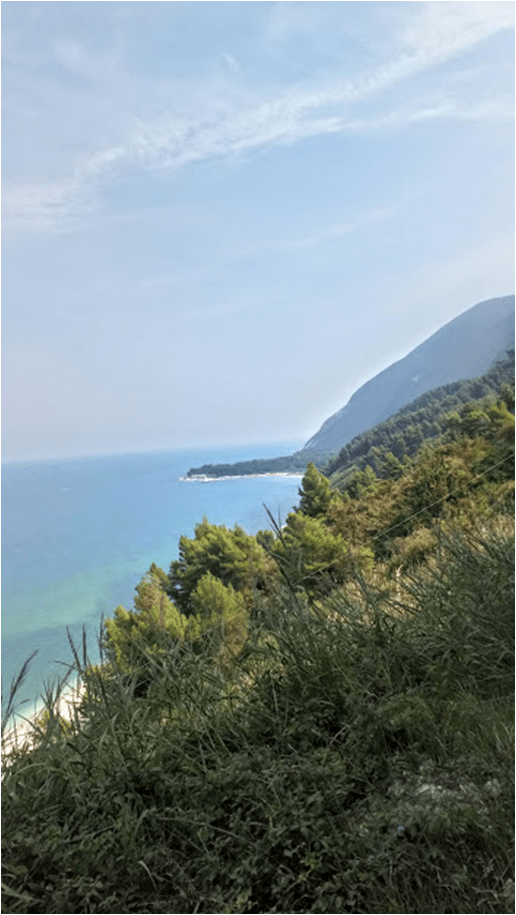
The absorbent quality of the fabric provides a fluid medium for the transition for the layers as the paint stains the fabric. The artist finds this representative of the changes to the landscape and the influence of the seascape on mindfulness. In addition, the artist works from own reference photographs, which are used to aid memory. The following methodologies of painting were used: constraining to three colours, which are either realistic or abstract in relation to the photograph and using colours depictive of emotion and/or memory of experienced particular to the seascape. Also,there are possible environmental messages in Painting 3 regarding the way in which the fabric hangs from the painting and that the base painting layer is left almost bare. It could be considered as a depiction of an abandoned and uncared for seascape.
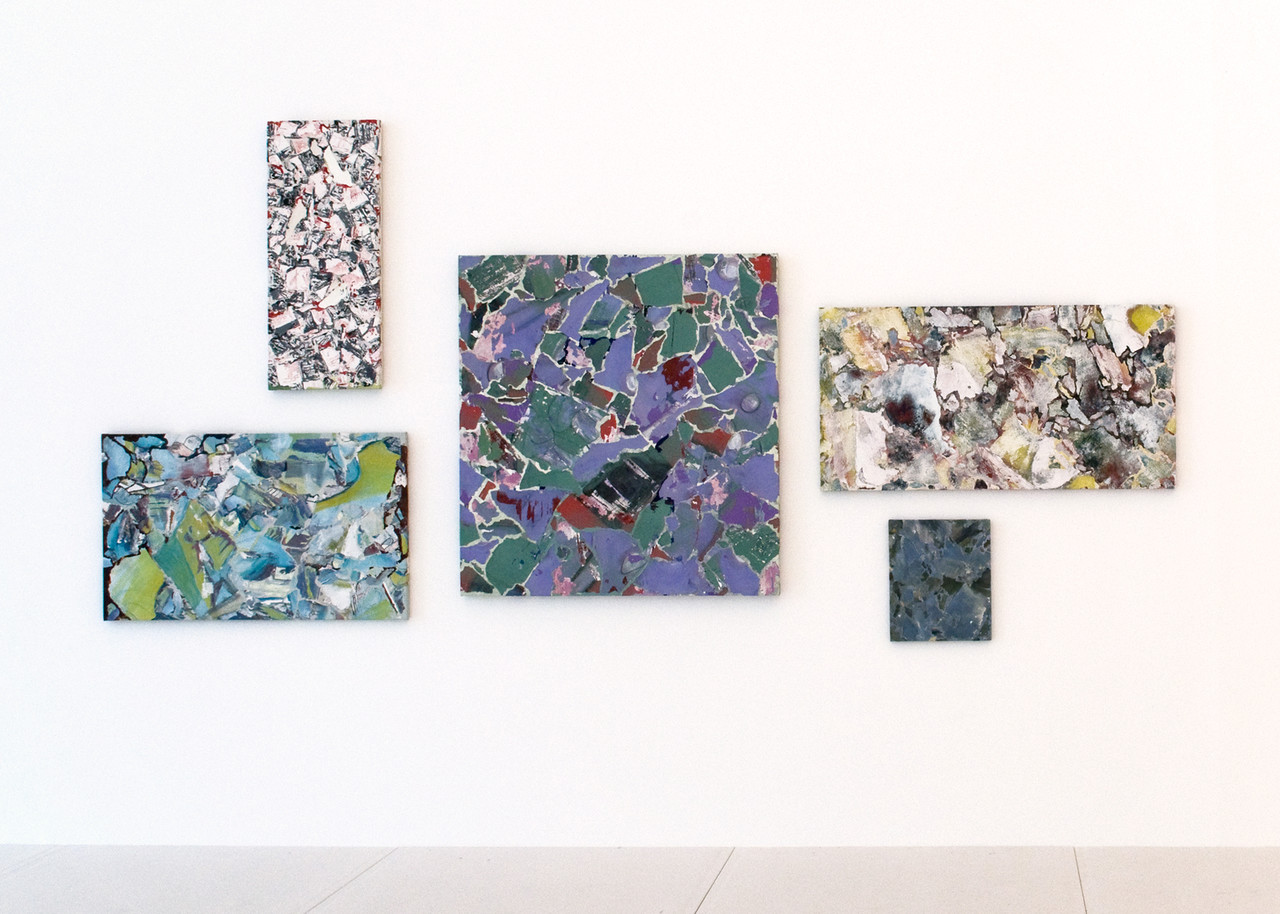
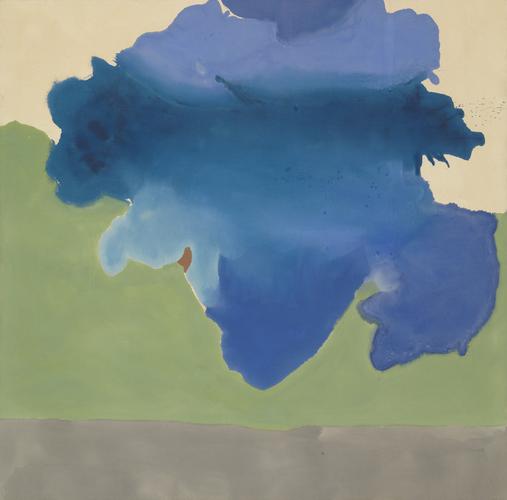
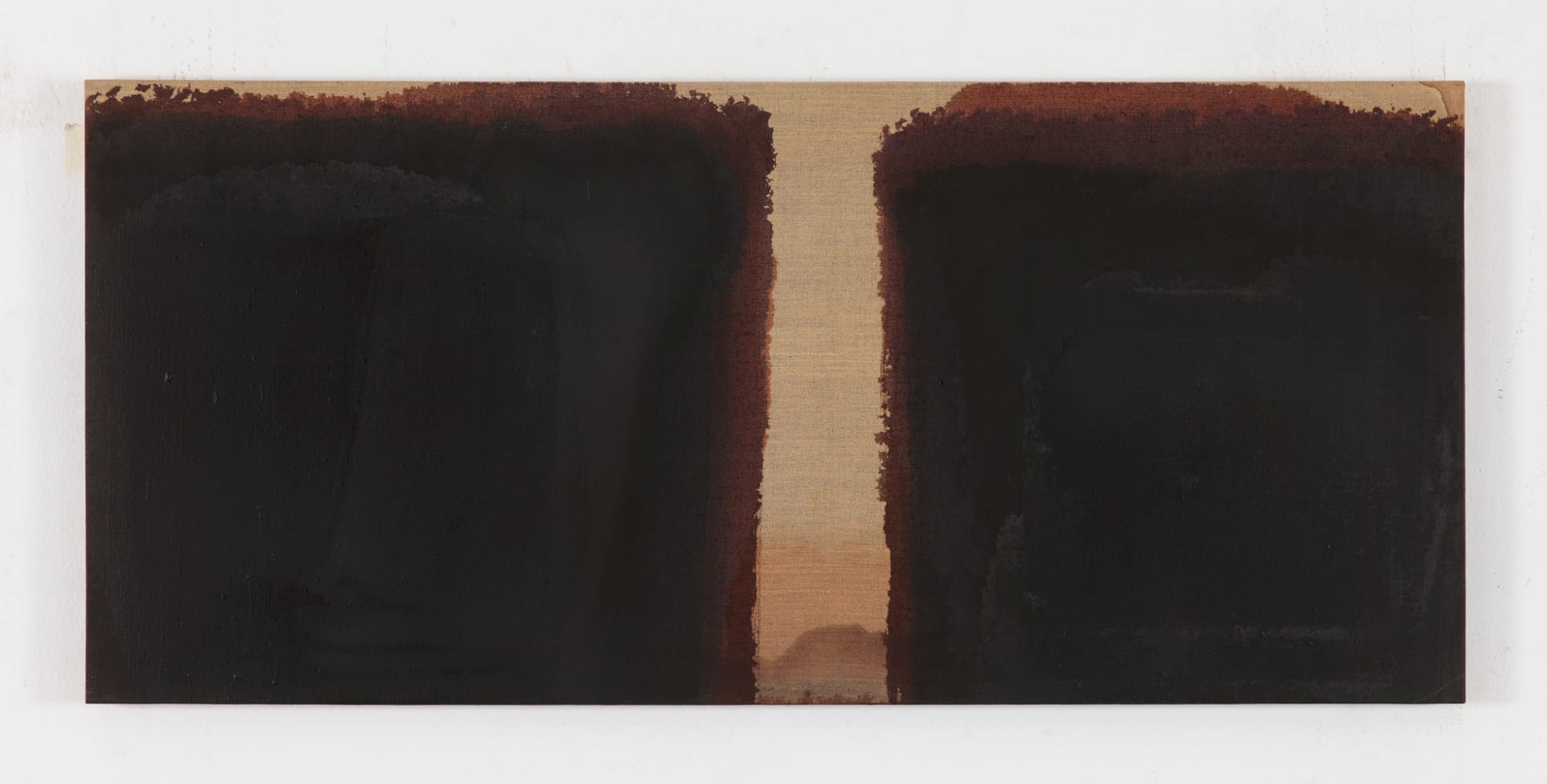
I’ve chosen to use layers to reflect on the topic of transition and translation that appears between the fabric. Methodology – an important part of the painting process is also in somewhat transitory stage, as it is neither abstract nor photorealistic. References of the works of Helen Frankenthaler and Yun Hyong – Keun have been impactful in the way in which the artist has approached mark making and staining the fabric. The process is mainly free-style and not planned in terms of the way in which the layers will look like. Much like Pavel Büchler’s work, the final pieces are a result of an on-going process of investigation of the materiality of the medium – fabric. The artist has considered the relativity of the material to the subject of the painting, despite the fact that it is a loose depiction of a seascape. This has been done through allowing the fabric to be stretched, folded and ripped. Painting 1 and 3 are good examples of the different ways in which the fabric has been represented to evoke the diverse qualities of the material and this refers to the work of Maya Deren.
























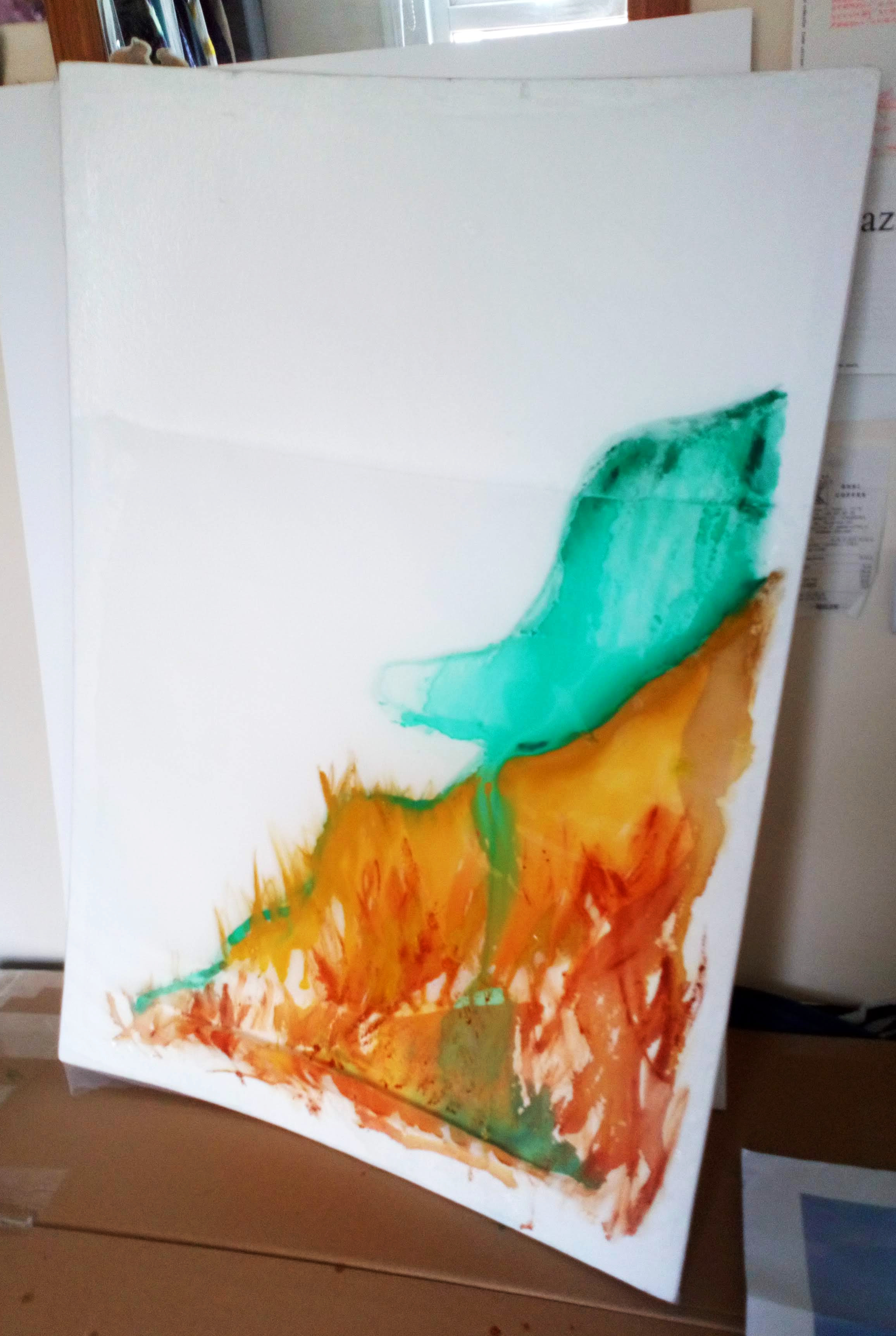

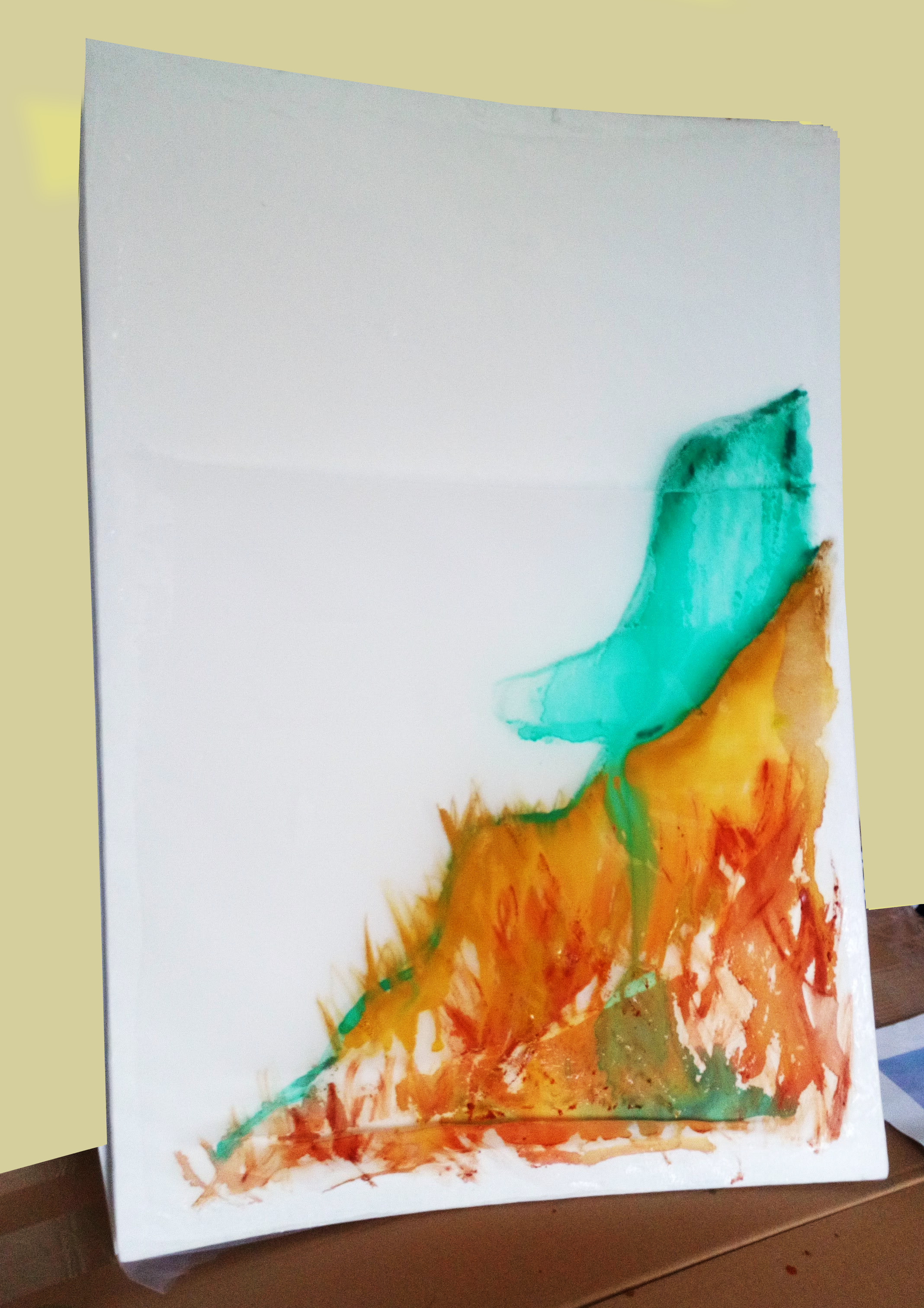


 Art Studio 2i (2019/20)