Artist references/appropriation – Spring term 2020, Easter Break and Summer term 2020

Artist references/appropriation – Spring term 2020, Easter Break and Summer term 2020

WEEK 2 and 3: artist were suggested in the Viva presentation

Gerhard Richter – both abstract paintings and seaside paintings

https://www.tate.org.uk/art/artists/gerhard-richter-1841 https://www.mariangoodman.com/artists/59-gerhard-richter/

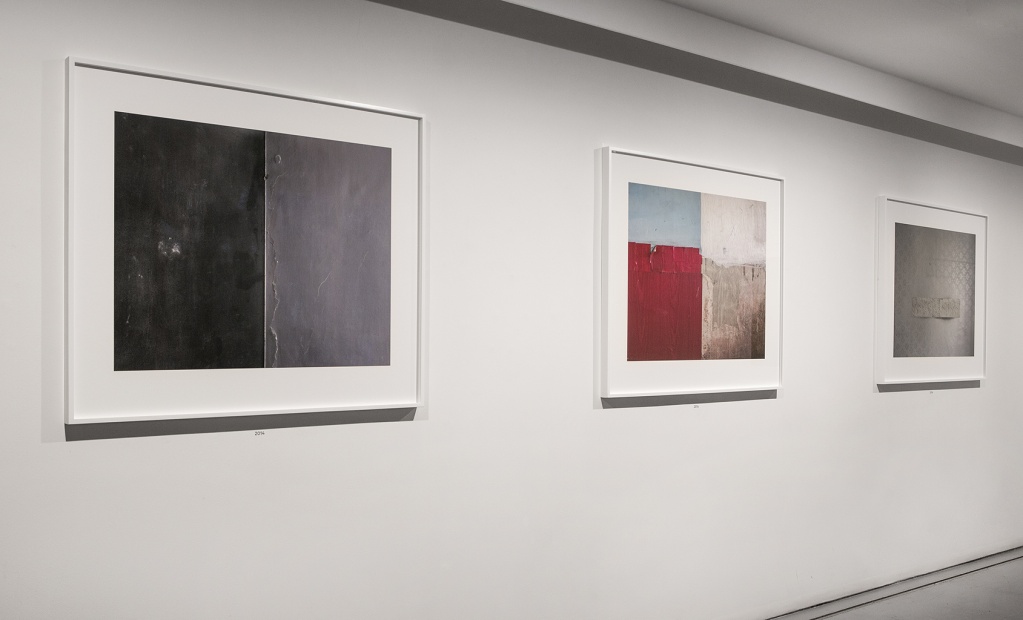
Abdallah (917-48), 2010, Lacquer under glass
(32 x 32 cm)

Richter’s abstract paintings show experimental process and it is vivid to me that the movement of the paint and textures created are the most significant features of the artwork. I think that I’d benefit from experimenting more with the way of painting – the process and the materials I use – perhaps I could use more unusual painting materials to create unique patterns.

Pavel Büchler: painitings washed down in a washing machine

https://www.artsy.net/artist/pavel-buchler https://tanyaleighton.com/artists/pavel-buechler
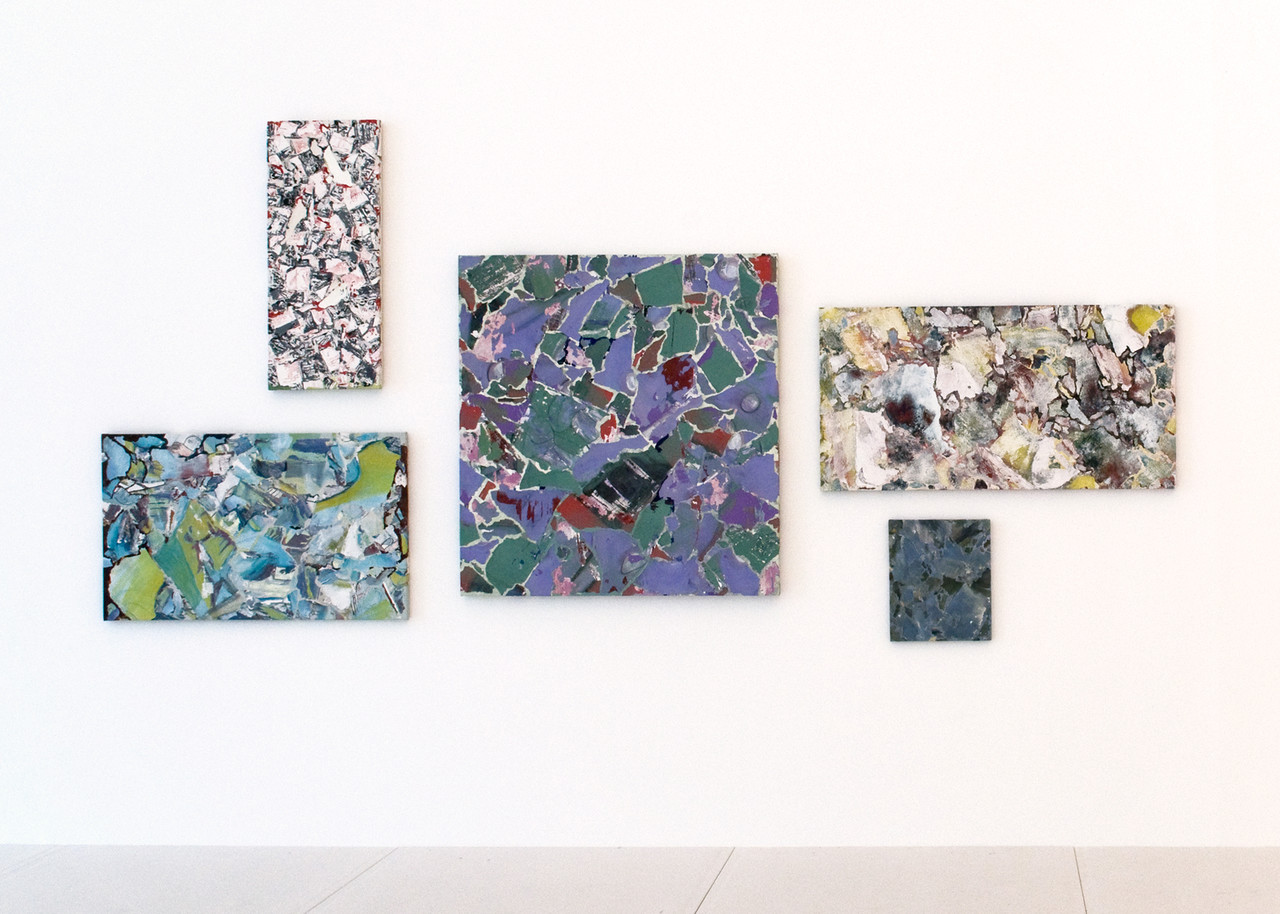
Under Construction (October 2010 – January 2011, Tinguely Museum, Basel)

Büchler’s work is most definitely relevant to my focus on the painting process in my art practice. The way the artist uses unconventional procedures as part of the creative process is very interesting and innovative to me and I’d like to explore the post-painting part of the process to further influence what I’d like to show as my final piece – still experimental.

WEEK 4: planning/sculpture

Both of these artists’ practices strongly focus on the shape and tautness within the shape. This is of high relevance to the curved shape of my foamboard bases for the paintings. The fabric provides a taut structure of to the base, although not professionally fixed onto the foamboard. Nonetheless, the idea is based on a sculptural making process, like represented in these works for example:

Naum Gabo, Linear Construction No.1 (1942-3)
Barbara Hepworth, Landscape Sculpture (1944-61)

WEEK 5: painting style, using free-style

Cy Twombly’s art practice is expressive and style free and this is in line with what direction I’m moving in terms of the way of painting.

Cy Twombly, Quattro Stagioni: Autunno (1993-5)

WEEK 6: Chosen blocking/wet on wet technique

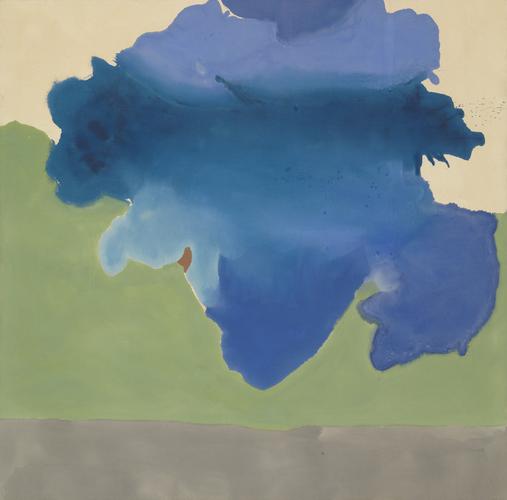
Staining fabric; Helen Frankenthaler
image
Helen Frankenthaler, The Bay (1963), Acrylic on canvas (205 x 208 cm)
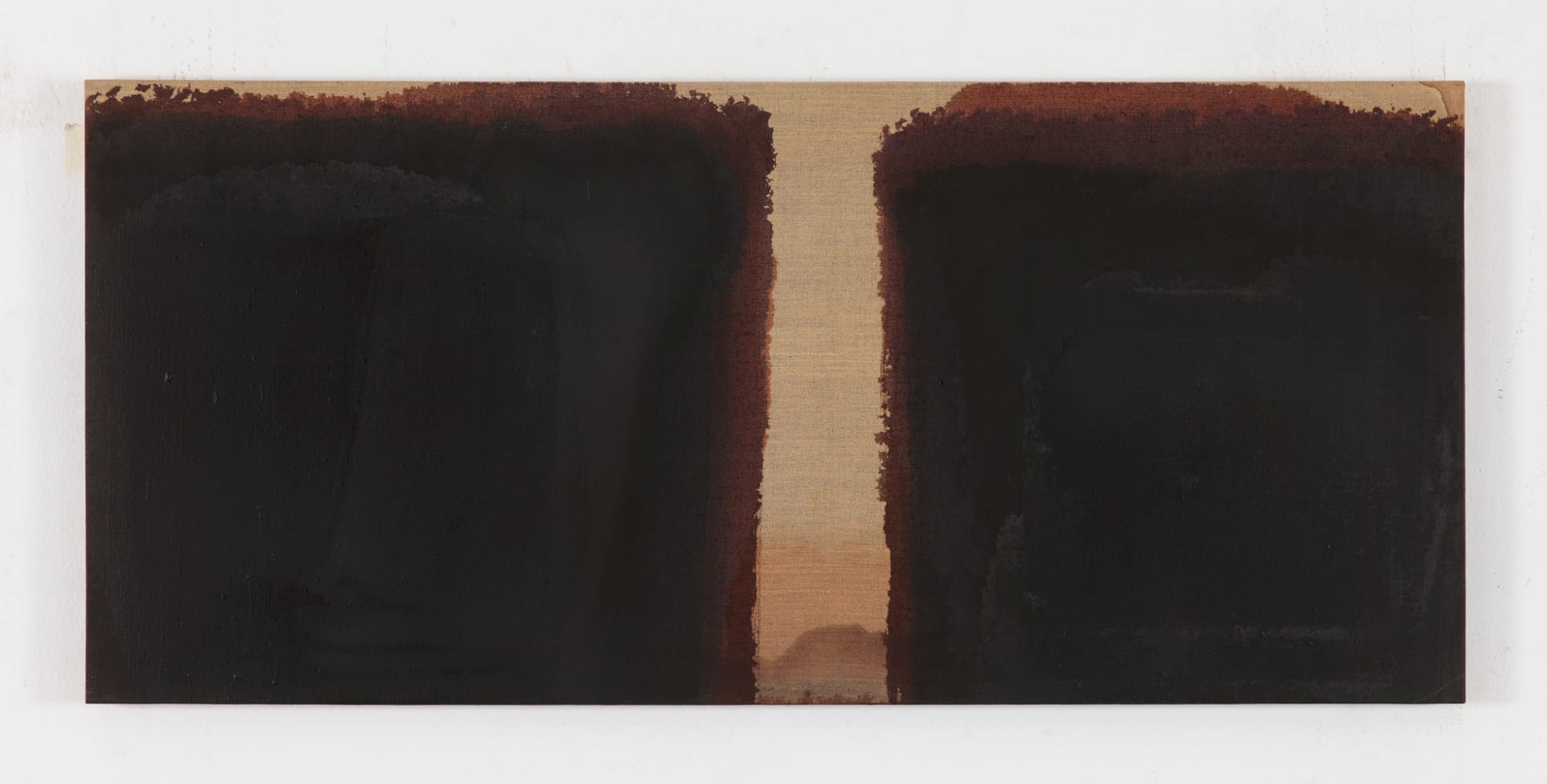
Yun Hyong – Keun, Burnt Umber and Ultramarine Blue (1991), oil on linen (45.3 x 99.8 cm)

I am intrigued by both of these artists as their paintings may seem simple at first. Both work in large scale and on absorbent mediums – linen and canvas as opposed to synthetic mediums or paper. I think that Frankenthaler‘s work frees mine approach of painting from a reference and motivates me to go towards more abstract direction, whilst keeping experimenting – I could experiment with acrylic next time, as opposed to using watercolours and oils interchangeably. Hyong-Keun‘s work is must more minimalistic and focuses on the technique and materiality and this is what I’d like to strongly focus when working with sheer layers of fabric.

The absorbent quality of the fabric provides a fluid transition for the layers of stains of paint, which I find representative of changes and transitions in my work in regards to the landscape and the influence of landscape on mindfulness.

WEEK 7:

Naum Gabo – stretching of the fabric + installation diagram

Polly Apfelbaum – installation; hanging fabric – scale too? – fabric on the wall rather stretched on a canvas

Cecily Brown – expressive/movement

WEEK 8:

Showing only the top layer and some parts of the process, what is visible – the process of manipulating the final version of the artwork >> Pavel Büchler

WEEK 9:

Tutorial artist suggestion: Maya Deren – black and white, flow of fabric similar to the flow and fluidity of water/waves

WEEK 10:

Flatter surfaces, small modifications – curves >> water/wave shapes/movement – Roni Horn – River Thames:

[no title] (1999), lithograph on paper

WEEK 11:

Emotionally related colours – constrainst in colour pallette and painting style:

EASTER BREAK:

Week 1 and Week 2: Memory based and emotional recollection based painter – Michael Armitage

Week 3: Ian Davenport – scale and painting process – pouring paint [pigments] and focusing on the materiality of paint/materials used [in my case – fabric]

Installation image from 'Horizons' at Dallas Contemporary, 2018
Ian Davenport, Horizons installation (2018)

Ann Hamilton – process, large-scale installations

https://art21.org/watch/extended-play/ann-hamilton-the-event-of-a-thread-short/

Summer term:

Week 1: Tina Jenkins – the visible layers in the painting – focusing on layers – the movement and folds of the materials – paitning as sculpture – expanded painting reference

https://www.saatchiart.com/art/Painting-The-Toll-Gate/164030/159374/view

Week 2: Expanded painting

Week 3: Display – contrasting work/using angles

Week 6 – Spring term – London galleries (17/02)

Week 6 – Spring term – London galleries (17/02)

  • Somerset House – Mushrooms: The Art, Design and Future of Fungi
  • Somerset House – Gallery 31 (New Wing) – I should be doing something else right now
  • Wellcome Collection

Reflection: The exhibition about mushrooms was really versatile and invocative. It provided me with an understanding of the subject of the exhibition and gave me further interest to perhaps come back to this topic area.

Artist talk: Karen Sandhu (12/02)

Artist talk: Karen Sandhu (12/02)

NOTES:

Allergy

Hyperbolic fiction

Poems

Itchy Archive – in the centre: artist book – audio, looks like a book – irritation due to allergens being embedded in the pages of the book >> epidermal irritation

Chapter 1: Rules and regulations – health and safety – yes/no >> object based out in dialogue with poetry >> archive

Chapter 2: History – 1603: noun – conservation – perservation, in 1934 transitoned to a verb >> cluster of words

Reading: theory – Foucault’s “The Archeology of Knowledge and The Discourse on Language”

Wunderkammer – “Cabinet of Curiosities” – consistency? – no consistency >> cluster of words [reference]

Susan Hiller – “From the Freud Museum” (1991-6) >> Lost Souls – in the house

Reflection from the talk:

I think that the area of the artist’s interest is very intriguing. I find it fascinating how immersive and intrusive the artowork is. This makes me more motivated and interested in focusing on the audience’s experience of my work.


Karen Sandhu, Karen Sandhu, ‘Two Poems’, How2, Vol 3, No 3.

Artist talk: Karen Kramer (05/02)

Artist talk: Karen Kramer (05/02)

NOTES:

not a linear art practice process

Current research:

1. Limulus: video/memories about struggling, insects used for vaccination and music record reference used (spinning record) >> accidental collision of two unrelated objects (a jukebox, which is the same jukebox that was in the bar the artist’s family owned, same songs and some songs bought)

horsecrab substance – used in pharamacy (horsecrab – human dreams; jukebox >> artist’s memories, the substance was tested against …)

in the terrain of water (Hurricane Catherina) conference >> landscape architects* ( Tapooku earthquake happened four weeks after the conference) >> designer: marine biology – biscuits, voice: 50 different marine animals used – creating a monster

*Now – food: questions from previous work – investigating water – river in Peru – changes (artist: Dilip Di Curiko) – made not just there – borders defined by humans >> river Thames: bunked – won’t change – question: Who defines it – people affected by floodings/river – poor, black (USA)

collecting found objects – Instagram: balloon and horseshoe crab breeding >> shapes – design, edit of the sounds of the two objects

2. Eponos Well – 30 objects found in the river Thames + music >> different iterations of the same song (changing through the time) >> haunted by water – spinning in space – objects

3. The eye that articulates belongs on land – Fokushima shore – remains of radioactivity – field trip – floating objects and water >> after an earthquake – radioactive meltdown

Own take away/reflection from the artist talk:

I was particularly interested in the topic of who defines the landscape and the significance of river in the landscape. I think that this is quite relevant to my interest in the seascape. Furthermore, this artist talk influences me to question how the landscape is changing.

Additional notes: River Thames – peaceful, somewhat isolated when looking from the bridge where scarscrapers and buildings create the landscape – banking of the river Thames/rivers – Karen Kramer – interesting topic to consider, link to?


“Selected for the Jerwood/FVU Awards 2016, Karen Kramer used her £20,000 bursary to make the film The Eye That Articulates Belongs on Land, HD Video, 2016

Shot in Shiretoko National Park in the far north of Japan, and within watchful radius of the Fukushima Daiichi nuclear reactor, Karen Kramer’s The Eye That Articulates Belongs on Land offsets beguiling images of unspoilt nature with graphic visual evidence of the ‘re-wilding’ of the landscape around the atomic plant since particular areas became off-limits to human access. Unseduced by romantic notions of wild nature as a wellspring of recovery or transformation, Kramer’s film is a reminder of how our perceptions of the natural environment are often deeply subjective, and prone to being clouded by myth, or partial knowledge.

Alternately embraced as a paragon of virgin wilderness or scorned as a baleful harbinger of a post-human no-man’s-land, our fallback readings of these two different landscapes belie the fact that they are each continually evolving; subject to complex internal dynamics, and never standing still. Outside the margins of everyday experience, and requiring a step into the unknown, Shiretoko and Fukushima are uncertain, liminal spaces – as porous and as shifting as the shoreline locations Kramer repeatedly returns to over the course of her film. A place where the solid ground of familiar existence is met with daily incursions and periodic breaches, the shoreline also has metaphorical significance: as a threshold between the material and the ethereal. As if to emphasise the point, Kramer introduces images of foxes patrolling the water’s edge. A key figure from the pantheon of Japanese culture and mythology, the fox can morph from animal to human form, and commune between the living and the dead. Shape-shifter extraordinaire, it is also a shadowy stalker of the contours of another indeterminate zone; one haunted by the lingering aftermath of a momentous or catastrophic event. Guided by voices that have their own quixotic, otherworldly logic, we are led to a series of deserted buildings, including an abandoned planetarium – its ceiling of stars flecked by dust motes and a phantom electrical presence in the air. As the title of Kramer’s film implies, there are oceanic thoughts in our minds for which we cannot always find adequate expression, as well as unseen forces in our lives whose future consequences remain equally mysterious and unfathomable.”

Karen Kramer, Jerwood/FVU Awards, 2016

https://www.jerwoodfvuawards.com/artists/karen-kramer

http://karenkramer.eu/

Intermedia Studio – Artist research and wide culture influences (continued project)

Intermedia Studio – Artist research and wide culture influences (continued project)

WEEK 3-4 :

  • Luxtorpeda – “Autystyczny” (Austistic) – English translation of chosen lyric:

“In the land of nowhere- nowhere entangled in myself

A bit selfish I sit and do nothing

The body is present, polite, and on the couch

The free spirit is breaking free and carousing together with the wind”

“Loving (me) and getting angry, you deal with it patiently

I also love you so much, just a little bit autistically”

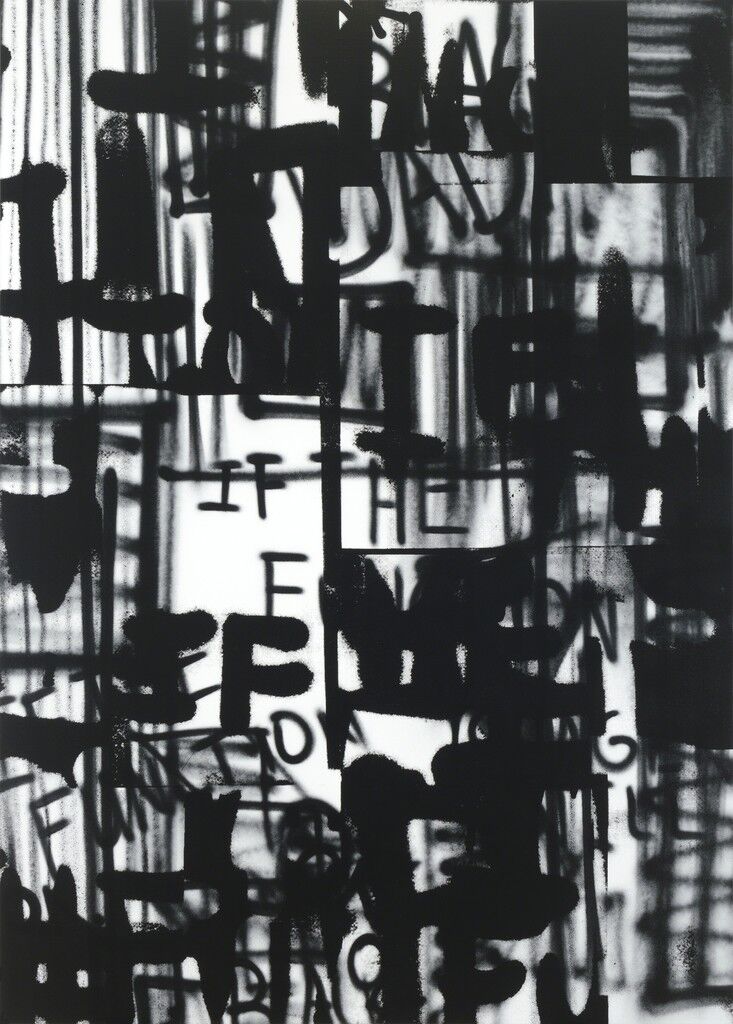
  • Adam Pendleton: raw language onto canvas – relevant in context – using the power of language to express emotion and the lack of communication; here this artist can express lack of communication through their depiction of lanuage in a raw and untidy way
If the function of dada
If the function of dada, 2017
Galerie Laurent Strouk

WEEK 5-6:

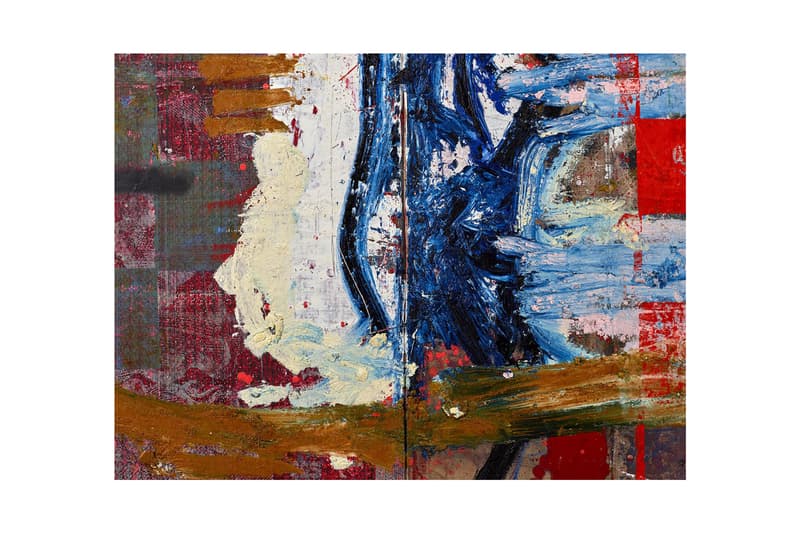
Oscar Murillo (https://www.davidzwirner.com/artists/oscar-murillo)

  • emphasis on movement and pattern
  • focus on texture as important in paintings
  • use of the medium to create layers
Manifestation
Image result for oscar murillo manifestation
Manifestations (2019), David Zwirner gallery, London

WEEK 7-8:

experimental work: n/a

WEEK 9-10:

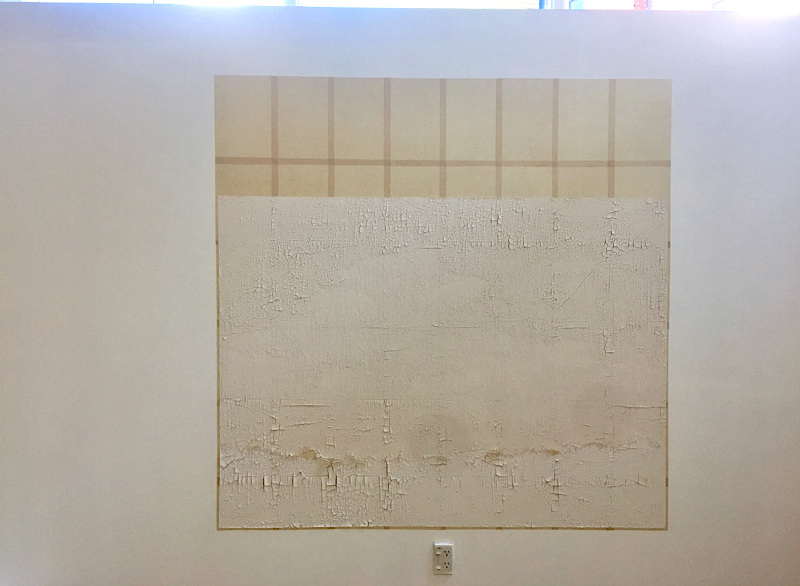
Yukari Kaihori (https://www.yukari-kaihori.com/)

  • focus on texture
  • emphasis on the materials and the relationship between two different materials, like in the artwork below
  • multi-medial work
Surface Space (2019), Kaolin on calligraphy paper, 2000mm x 2000mm, Elam Artists, Auckland, New Zealand

Dušan Šimánek (https://www.atelierjosefasudka.cz/cs/vystava/ticho-ii); capturing texture and properties of fabric/textile

Ticho II (Silence II) (2019), photographs, Ateliér Josefa Sudka, Prague, Czech Republic

WEEK 11-12:

Helen Frankenthaler (https://www.tate.org.uk/art/artists/helen-frankenthaler-1114)

  • abstract and bold
  • staining of the medium
  • patterns
[no title] (1997), Etching and aquatint on paper, Tate Department of Print

Venice Biennale 2019 – Artist Inspiration

Venice Biennale 2019 – Artist Inspiration

While studying in AAAD in Prague, I got the chance to go on a trip to Venice for the Venice Biennale. Having seen a lot of art in Venice Biennale, I’d like to highlight some of artists and artworks that can be relevant to my practice or in my future art practice (found interesting) :

COUNTRIES:

  1. Czech Republic and Slovak Republic (https://www.labiennale.org/en/art/2019/national-participations/czech-republic-and-slovak-republic)
  2. Ireland (https://www.labiennale.org/en/art/2019/national-participations/ireland)
  3. Grand Duchy of Luxembourg () https://www.labiennale.org/en/art/2019/national-participations/grand-duchy-luxembourg
  4. Madagascar (https://www.labiennale.org/en/art/2019/national-participations/madagascar)
  5. Nordic countries (Finland, Norway and Sweden) (https://www.labiennale.org/en/art/2019/national-participations/nordic-countries-finland-norway-sweden)
  6. The Netherlands (https://www.labiennale.org/en/art/2019/national-participations/netherlands)
  7. Peru (https://www.labiennale.org/en/art/2019/national-participations/peru)
  8. Poland (https://www.labiennale.org/en/art/2019/national-participations/poland)
  9. Portugal (https://www.labiennale.org/en/art/2019/national-participations/portugal)
  10. Saudi Arabia (https://www.labiennale.org/en/art/2019/national-participations/saudi-arabia)

Collateral and Artists: