Spring term – Week 9 (09/03)

Spring term – Week 9 (09/03)

WEEK 9:

Tutorial:

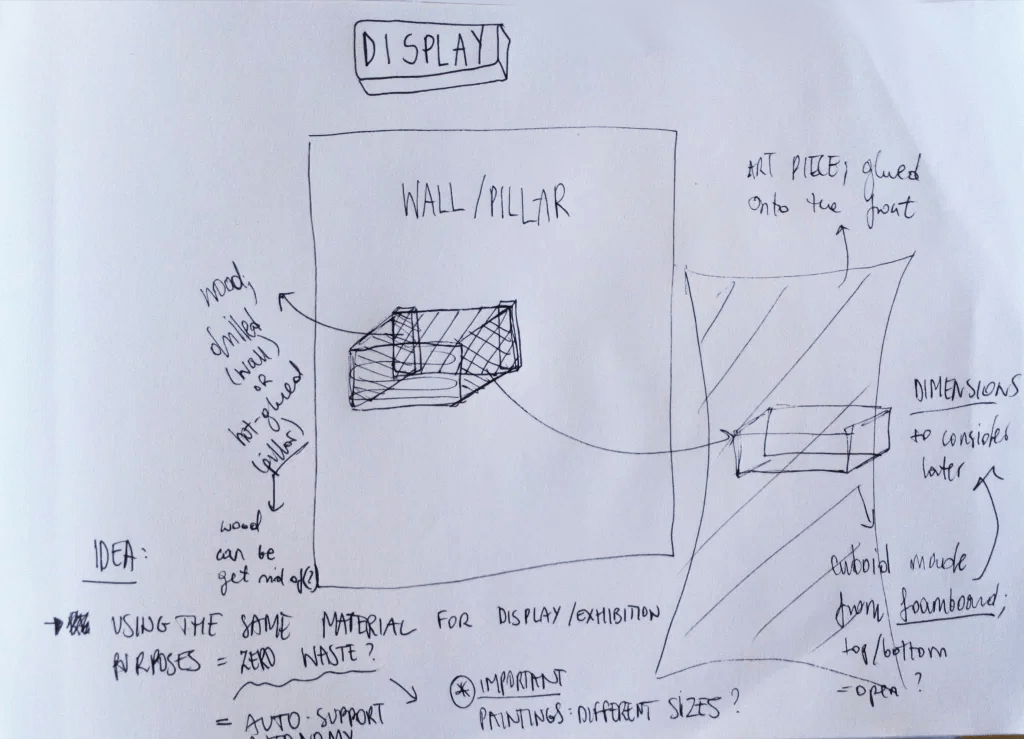
– Display: on the floor, from above, connected

Important to experiment and consider the viewer’s perspective; experiment with display

– slightly different curve, paint using the other side

– using different lengths of fabric – overlapping?

-using layers to project the shift/movement; seperating the layers and moving them to create a sense of movement – animation >> could use transparent pva glue mixed with water to stretch/stiffen the particular layer (would have to cover the whole fabric and hand taut – or not – using folds in the fabric??)

– attaching paintings to create a more complex shape >> would be interesting and helpful in expressing the idea of emotions being complex in relation to mental disorders and communication within that, of emotions and about emotions – autism – – landscape of emotion, painting can be attached in a way of displaying imbalance; reference to nature too?

– sticking the fabric a bit differently: glue on both sides on both sides of the foamboard

Spring term – Week 8 (02/03)

Spring term – Week 8 (02/03)

WEEK 8:

Suggestion: keeping the layers together – the process can be seen especially in certain light and in the areas that I left unpainted; the area was left unpainted because of the rules of three colours used only and using lines to build structure – it gives interesting contrast with the drips of paint

Experimenting with the layers:

prospective – photos taken in week 11 during the lockdown, hence at home

Idea: considering using transparent/clear pva glue to stiffen the top layer and work with layers in an animation manner – to show shifts in landscape as representative of shifts of emotion and the magnitude of shifts can be suggestive of emotional balance or its lack + think about the benefits of double-sided painting, but mirrored inversed of course

Spring term – Week 7 (24/02)

Spring term – Week 7 (24/02)

WEEK 7: Next painting

– Starting next (of the same photo, different format) painting

This image has an empty alt attribute; its file name is image-3.png

– Different position of painting

-Different type of paint: water- soluble oil paints, only water used to dilute

Colours used: ultramarine, phthalo

This image has an empty alt attribute; its file name is dsc_2718-1.jpg
This image has an empty alt attribute; its file name is dsc_2718.jpg
This image has an empty alt attribute; its file name is dsc_2720.jpg
This image has an empty alt attribute; its file name is dsc_2719.jpg
Dimensions: A1 (59.4 x 84.1 cm)

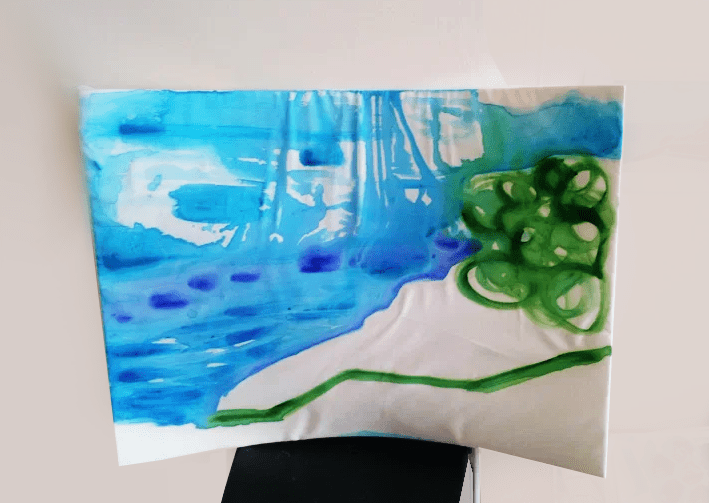
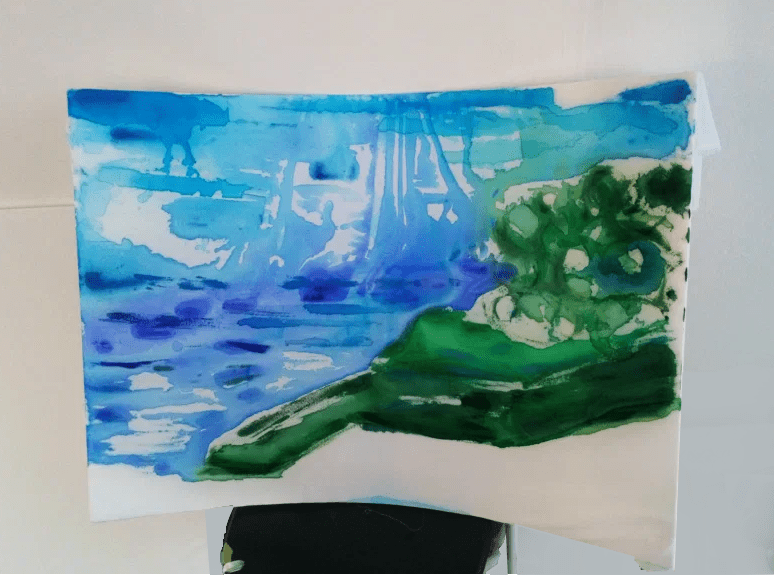
Similar painting process to the previous painting, but here, only one position was used to paint, which is a result of the previous experiment – the drips are a unique feature that draw attention

Spring term – Week 6 (17/02)

Spring term – Week 6 (17/02)

WEEK 6:

– Display idea; customary/temporary because it has to be made new for every exhibition (but the painting/artwork does not have to be made again – new)

– Finishing first painting and starting next (of the same photo, different format)

– Blocking and some wet on wet technique with watercolours with 3 colours only

Colours used: ultramarine, coeruleum and sap green

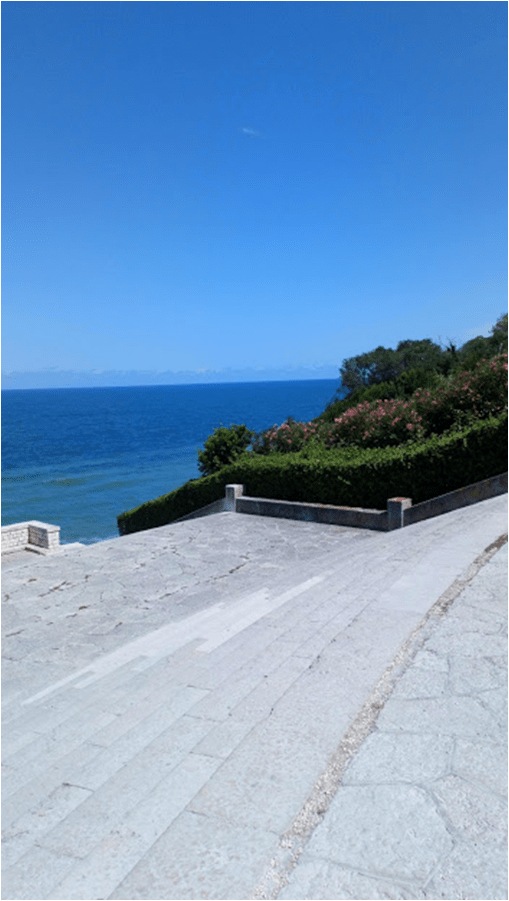
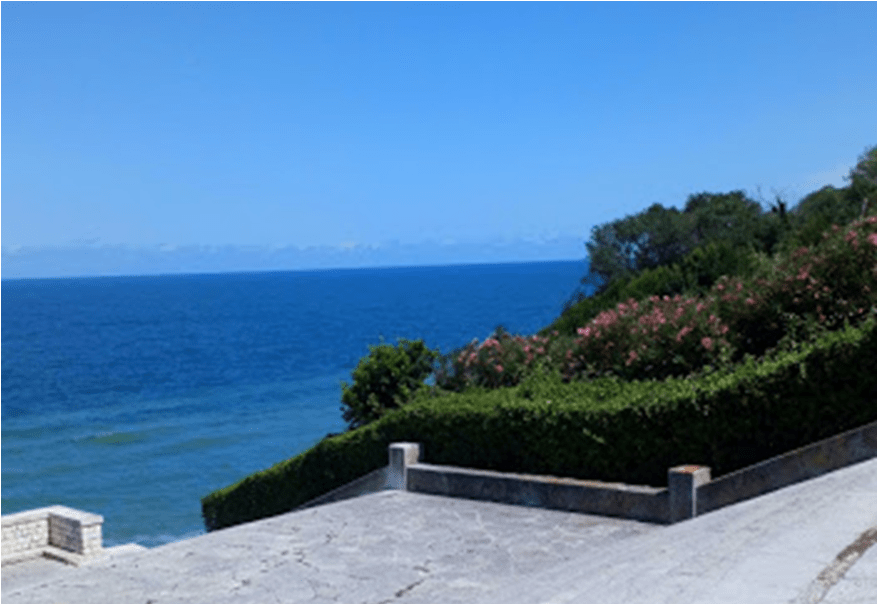
Photo used:

The painting process: I’ve used fast brushstrokes to create simple outlines of the parts of the lanscape and experimented with painting the sky and water part of the seascape – at first: painted laying down, which is visible in the drips moving towards the top of the painting – in the end, this results in an ineresting movement of the seascape

The middle layer (polyester fabric), when the top layer is taken off, A1 (59.4 x 84.1 cm)
The top layer, on the reverse side
The foamboard and the tulle fabric layer (bottom) , A1 (59.4 x 84.1 cm)
Detail of the texture and paint layers

Spring term – Week 5 (10/02)

Spring term – Week 5 (10/02)

WEEK 5: Ideas and issues regarding the painting process

– rules: use 3 colours only, no white allowed

– first painting: paint from above, watercolours, very watered down?, more conceptual – thought out opposed to expressive (last approach); using shapes as direction of painting + simpler, to highlight the qualities/effect of the curved board

– use sponge?

– technical difficulties due to the curved board to consider

– top fabric not stretched perfectly; temporary (that’s the intention at least) ?

Spring term – Week 4 (03/02)

Spring term – Week 4 (03/02)

WEEK 4:

The fabric layers are attached using PVA glue – this allows me to peel off the layers if necessary/desired and does not damage/leave marks on the foam board – it is like the fabric becomes part of the the object – the curved foam board and together, produce a painting.

I’ve decided to use photographs as references for the composition and colour values, one landscape and one portrait orientated

Spring term – Week 3 (27/01)

Spring term – Week 3 (27/01)

WEEK 3:

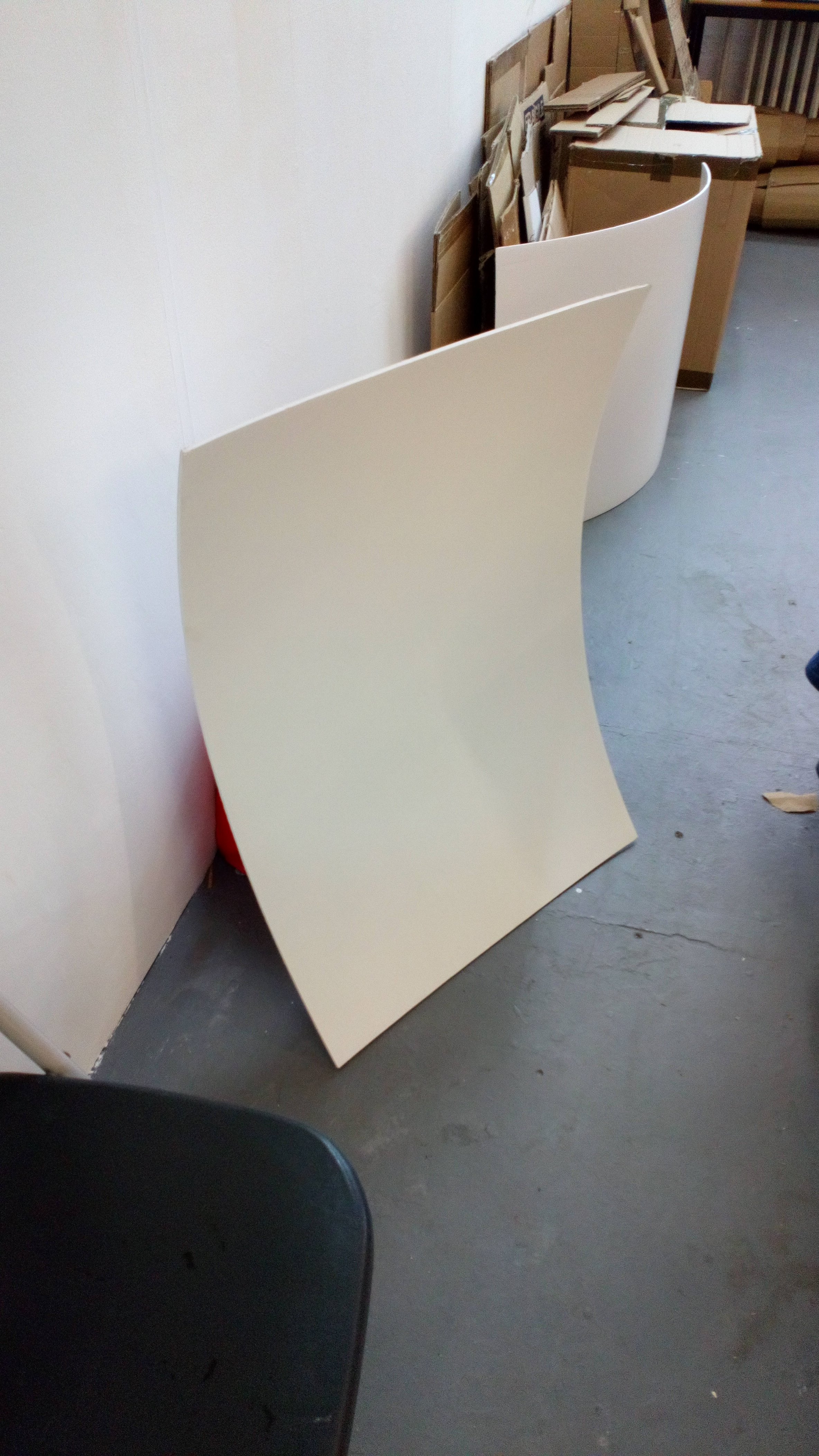
Shape achieved by bending the foam board manually, with help of wet surface as the board is painted using emulsion paint, A1 (59.4 x 84.1 cm)

Here, it is an intentional process of manipulating the foam board as opposed to last term, when this happened unintentionally. I may experiment with different materials to use and how effective they are in allowing me to manipulate the shape.

Studio tutorial: Angus Wyatt

  • consider installation towards the end, painting as a process
  • possibilities: convex vs. concave shape of the board
  • think about installation throughout the process; the technicalities of display, i. e., fixed onto the wall